
Medicare Enrollment Periods Explained
The short answer
Medicare has four main enrollment windows: your Initial Enrollment Period (IEP) - a 7-month window around your 65th birthday month; the General Enrollment Period (GEP), January 1 - March 31, for Part B or premium Part A after your IEP if no Special Enrollment Period applies; the Annual Enrollment Period (AEP), October 15 - December 7, for switching Medicare Advantage or Part D plans; and Special Enrollment Periods (SEP) triggered by life events like losing employer coverage or moving.
Medicare has different enrollment periods for signing up for Part A and Part B and for choosing or changing health and drug plans. Missing a deadline may affect your coverage or costs, but the next step depends on your situation. Check whether a Special Enrollment Period applies before assuming you must wait.
The good news: once you know the four windows, the system is actually pretty simple. Here's what each one means, who it's for, and what happens if you miss it.
The Four Enrollment Windows at a Glance
| Window | When It Happens | Who It's For |
|---|---|---|
| Initial Enrollment Period (IEP) | 7 months: 3 months before your 65th birthday month, your birthday month, and 3 months after | Most people becoming eligible for Medicare for the first time |
| General Enrollment Period (GEP) | January 1 - March 31 every year | People who need Part B or premium Part A after their Initial Enrollment Period and do not qualify for a Special Enrollment Period |
| Annual Enrollment Period (AEP) | October 15 - December 7 every year | Anyone who wants to switch Medicare Advantage or Part D prescription drug plans for the following year |
| Special Enrollment Period (SEP) | Varies - triggered by a qualifying life event | People with a specific circumstance, like losing employer coverage or moving |
Already in Medicare Advantage? The MA Open Enrollment Period
The Medicare Advantage Open Enrollment Period runs January 1–March 31 each year for people already enrolled in a Medicare Advantage plan. You can make one change: switch to another Medicare Advantage plan or return to Original Medicare and, if needed, join a separate Part D plan. The change generally starts the following month. This is not a first-time Medicare sign-up period.
Initial Enrollment Period (IEP)
This is the window most people will use. It's built around your 65th birthday month:
The 3 months before your birthday month.
Your birthday month.
The 3 months after your birthday month.
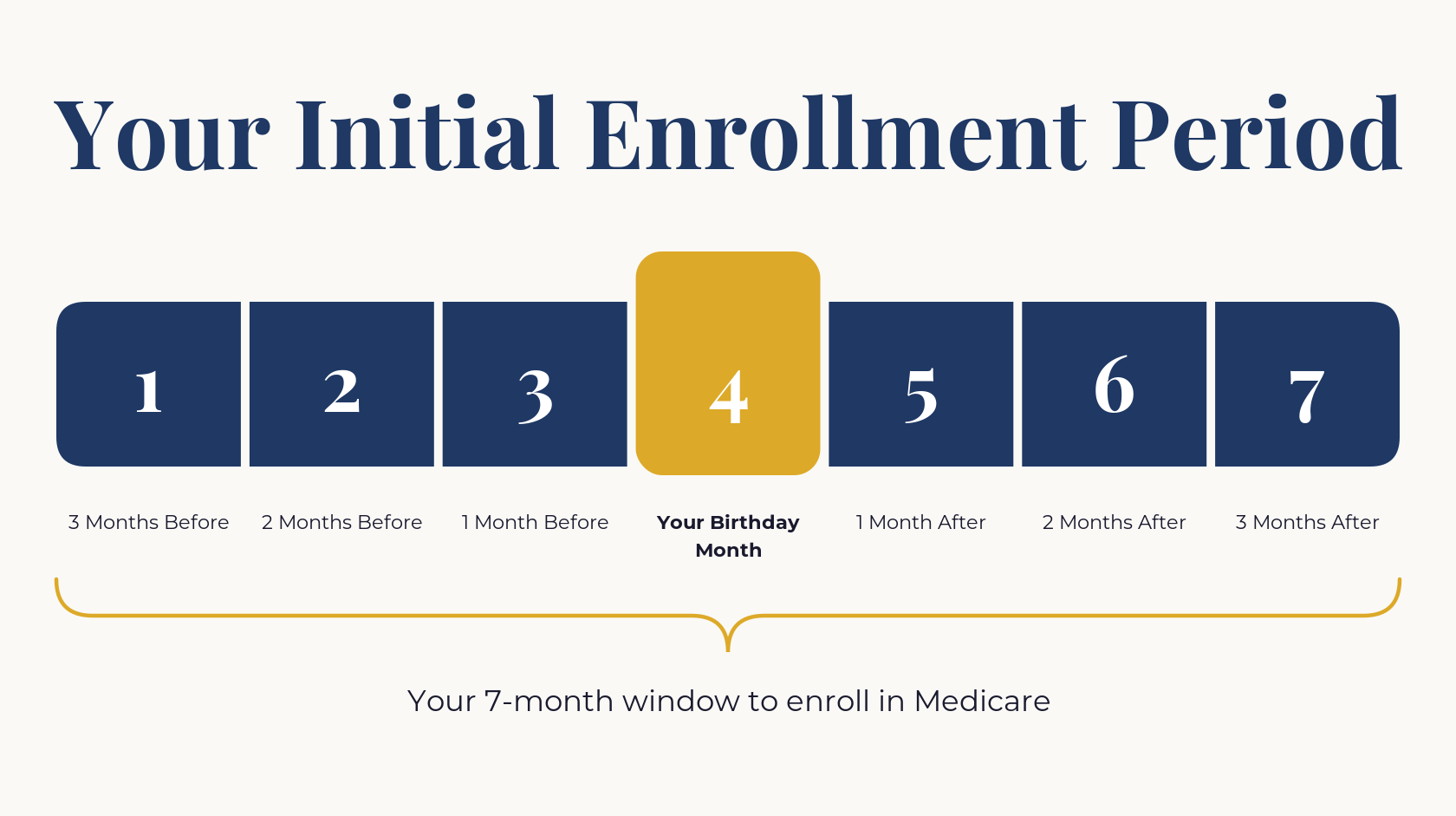
That's 7 months total. If your birthday is on the first of the month, Medicare treats your IEP as if your birthday were the month before - worth double-checking with a licensed agent if this applies to you.
Why timing matters inside the IEP: enrolling in the months before your birthday month generally means coverage starts on time, with no gap. Waiting until later in the window can delay when your coverage actually begins. If you're planning to enroll during your IEP, earlier is almost always better than later.
Missed Your Window? The General Enrollment Period
If your Initial Enrollment Period has ended, first check whether you qualify for a Special Enrollment Period. If you do not, the General Enrollment Period runs January 1–March 31 each year for Part B and Part A if you must pay a premium. Coverage starts the following month. Premium-free Part A has different enrollment rules.
A late enrollment penalty may apply, depending on your enrollment and coverage history. For Part B, ask Social Security whether your circumstances qualify for a Special Enrollment Period. Having prescription drug coverage described as "creditable" does not by itself establish eligibility for a Part B Special Enrollment Period.
Annual Enrollment Period (AEP)
Also called Fall Open Enrollment, AEP runs October 15 through December 7 every year. This is the window for people who are already enrolled in Medicare and want to make changes for the following year, including:
Switching from one Medicare Advantage plan to another.
Switching from Medicare Advantage back to Original Medicare (or vice versa).
Joining, switching, or dropping a Part D prescription drug plan.
Changes made during AEP take effect January 1 of the following year. This is the busiest season in Medicare - plan details, formularies, and provider networks can all change year to year, so AEP is a good annual checkpoint even if you think your current plan is fine.
Fall Open Enrollment is for Medicare Advantage and Part D choices; it is not the initial Part A and Part B sign-up window. If you are considering returning to Original Medicare, check drug coverage and Medigap availability before making the change.
Special Enrollment Periods (SEP)
Special Enrollment Periods have different rules for Part A and Part B than for Medicare Advantage and Part D. A qualifying event may let you enroll or make a particular plan change outside the usual dates.
For Part B, group health coverage based on your or your spouse’s current employment may qualify you for a Special Enrollment Period. It generally ends eight months after the employment or group coverage ends, whichever happens first. COBRA and retiree coverage do not extend that deadline. Other special circumstances may also qualify; ask Social Security to review your situation.
For Medicare Advantage and Part D, events such as moving outside your plan’s service area or losing certain coverage may create a chance to change plans. The permitted changes and deadlines depend on the event. Confirm which rule applies before ending existing coverage.
What Happens If You Miss a Window
A missed deadline may mean a coverage gap or a late enrollment penalty. A penalty is not automatic simply because a date has passed. Part B and Part D have different rules and exceptions. When a penalty applies, it generally continues while you have that type of coverage.
For Part D, going 63 consecutive days or more without Medicare drug coverage or other creditable drug coverage after your initial enrollment period may trigger a penalty. People who qualify for Extra Help do not pay a Part D late enrollment penalty.
Gather your coverage dates and check your next enrollment opportunity. Social Security can review Part B timing; Medicare or your drug plan can help with Part D questions.
Medigap has a separate enrollment period
Your federal Medigap Open Enrollment Period generally lasts six months, starting the first month you are 65 or older and enrolled in Part B. Later options can depend on guaranteed-issue rights and state protections. Fall Open Enrollment does not guarantee that you can buy a Medigap policy. Check your options before changing coverage.
A Simple Way to Stay on Track
Because these windows depend on your specific birthday, work status, and coverage history, the safest approach is to map out your personal enrollment calendar rather than relying on general dates alone.
Not sure which window applies to you? That's exactly what a licensed agent is for. Call the AdviseCare Insurance team at (813) 544-7066 or book a no-cost, no-obligation call. We'll walk through your specific situation and help you enroll at the right time - no pressure, no plan pitch until you're ready.
Frequently Asked Questions
When can I first sign up for Medicare?
Most people first enroll during their Initial Enrollment Period (IEP) - a 7-month window built around their 65th birthday month: the 3 months before, the birthday month itself, and the 3 months after. If your birthday is on the first of the month, Medicare treats your IEP as if your birthday were the month before, so it's worth double-checking your exact window with a licensed agent.
What is the Medicare Annual Enrollment Period?
The Annual Enrollment Period (AEP), also called Fall Open Enrollment, runs October 15 through December 7 every year. It's the window for people already enrolled in Medicare to switch Medicare Advantage plans, move between Medicare Advantage and Original Medicare, or join, switch, or drop a Part D prescription drug plan. Changes take effect January 1 of the following year.
What happens if I miss my Medicare enrollment window?
You may still have an enrollment option. Check whether a Special Enrollment Period applies before waiting for the next standard window. Coverage gaps and late penalties depend on the type of Medicare coverage and your circumstances. Review your dates with Social Security for Part A or Part B, or with Medicare for health and drug plan enrollment.
What qualifies me for a Special Enrollment Period?
It depends on which coverage you need and what changed. Part B has rules for coverage based on current employment and other special circumstances. Medicare Advantage and Part D have separate rules for events such as a move or loss of coverage. Each rule has its own deadline and permitted actions, so confirm the details for your situation.
Get the No-Cost Enrollment Calendar Worksheet
A fillable one-page worksheet to map your personal IEP, AEP, and Special Enrollment dates.