
The Complete Turning 65 Medicare Checklist: Your Month-by-Month Timeline
The short answer
Your Initial Enrollment Period (IEP) is a 7-month window: the 3 months before the month you turn 65, your birthday month, and the 3 months after. Enroll during the 3 months before your birthday month and coverage starts on time, with no gap. Miss the window without qualifying employer coverage and you can face permanent late penalties. The checklist below walks you through it month by month.
Turning 65 is one of the few birthdays that comes with paperwork - and deadlines that can follow you for the rest of your life. Enroll in Medicare at the right time and the process is smooth. Miss your window and you can face permanent late penalties and months without coverage.
The good news: the timeline is completely predictable. This turning 65 Medicare checklist walks you through exactly what to do, month by month, starting six months before your 65th birthday.
First, Know Your Enrollment Window
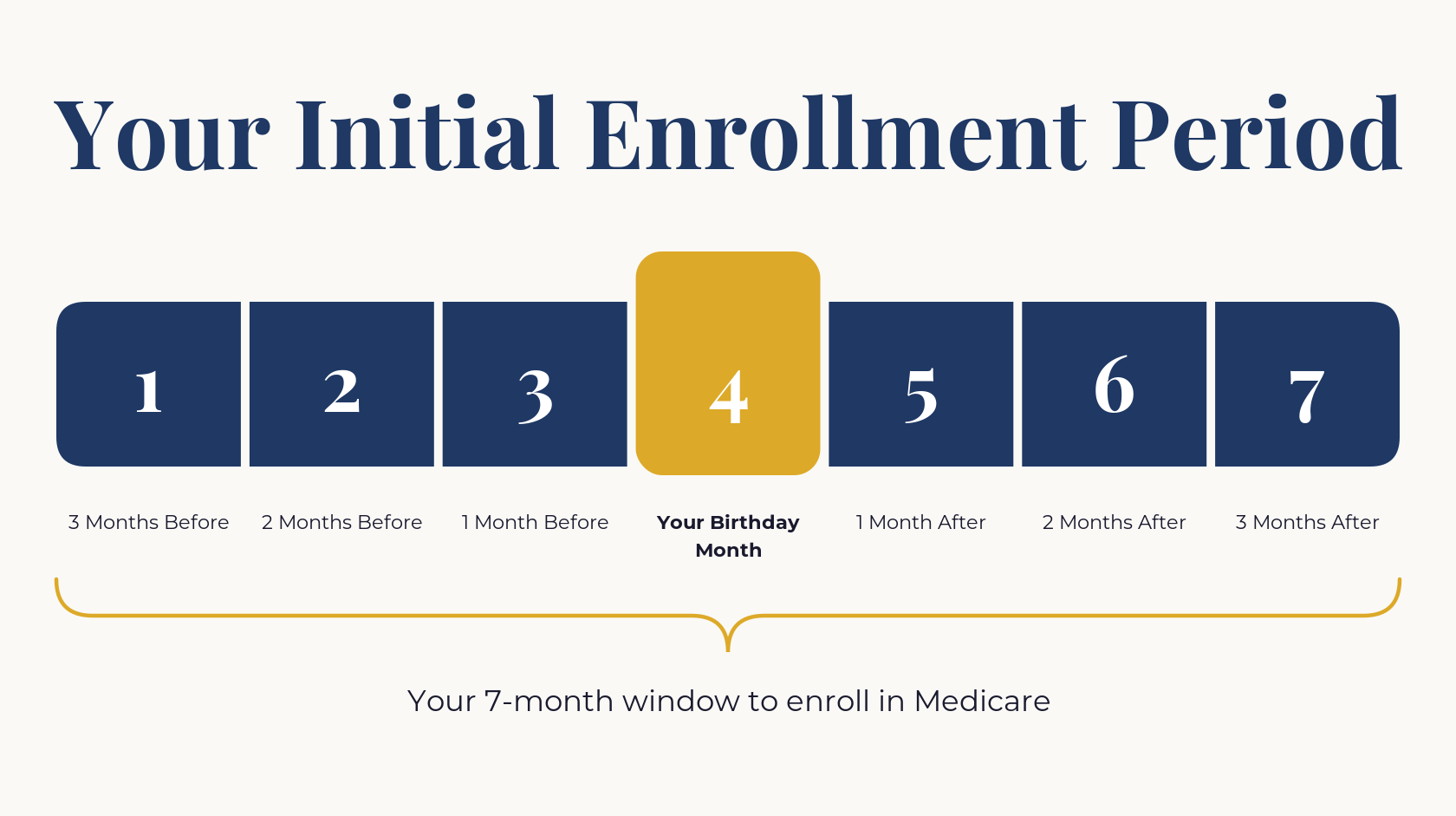
Your Initial Enrollment Period (IEP) is a 7-month window built around your 65th birthday:
The 3 months before the month you turn 65.
Your birthday month.
The 3 months after your birthday month.
One important exception: if your birthday falls on the 1st of the month, your entire window shifts one month earlier. Medicare treats you as eligible the month before your birthday month. If you were born on June 1, your eligibility begins May 1, and your enrollment window is built around May, not June. This catches people every year - check this first.
Timing determines when coverage starts. Sign up during the 3 months before your birthday month and coverage begins the first day of your birthday month. Sign up during your birthday month or the 3 months after, and coverage begins the first day of the following month. Enrolling early means no gap.
6 Months Before Your Birthday: Get Oriented
□ Confirm whether you'll be automatically enrolled. If you're already receiving Social Security or Railroad Retirement benefits at least 4 months before you turn 65, you'll be enrolled in Part A and Part B automatically - your Medicare card arrives in the mail before your birthday. Everyone else must actively sign up. Do not assume Medicare finds you; for most people, it doesn't.
□ Decide whether you're retiring or working past 65. This single decision changes your entire timeline. If you (or your spouse) will keep employer health coverage from a company with 20 or more employees, you may be able to delay Part B without penalty - see the "Working Past 65" section below before doing anything else.
□ If you contribute to an HSA, plan your stop date now. Once you enroll in Medicare, you can no longer contribute to a Health Savings Account. And if you enroll after 65, Part A coverage can be backdated up to 6 months - which means HSA contributions during those backdated months can trigger tax problems. If you'll enroll past your 65th birthday, the safe move is to stop HSA contributions 6 months before you file for Medicare. Our guide to HSAs, employer coverage, and Medicare covers this in detail - and talk to your benefits administrator or tax advisor about your exact date.
□ Start learning the vocabulary. Part A (hospital), Part B (medical), Part D (prescriptions), Medicare Advantage, Medigap. You don't need to be an expert - you need to know enough to recognize the decision in front of you.
3 Months Before: Your Enrollment Window Opens
□ Enroll in Medicare Part A and Part B (unless you're delaying Part B for employer coverage). The fastest way is online at ssa.gov; you can also call Social Security or visit a local office. Enrolling now, before your birthday month, means your coverage starts on time with no gap.
□ Choose your coverage path. This is the biggest decision on this checklist, and it comes down to two routes:
Original Medicare + a Medigap plan + a Part D drug plan - more flexibility in doctors and hospitals, more predictable out-of-pocket costs, typically a higher monthly premium.
A Medicare Advantage plan (Part C) - combines your coverage into one plan, often with extra benefits like dental and vision, typically lower premiums, in exchange for a plan network and plan rules.
Neither is universally better. The right answer depends on your health, your budget, your doctors, and how you like to use care. Our Medigap vs. Medicare Advantage comparison breaks down the trade-offs - and this is exactly the decision a licensed agent can walk you through in one phone call, at no cost to you.
□ Make your doctor and prescription list. Write down every doctor you want to keep and every medication you take, with dosages. Any plan you consider gets checked against this list first. It is the single most effective way to avoid an unpleasant surprise in January.
Your Birthday Month: Confirm and Finalize
□ Confirm your Part A and Part B are active. Check your welcome packet and Medicare card (or your account at medicare.gov). Verify your coverage start date.
□ Finalize your plan choice. If you're going the Medigap route, note this carefully: your Medigap Open Enrollment Period starts the month you're both 65 and enrolled in Part B, and lasts 6 months. During this window, insurers must accept you regardless of health history. After it closes, you can be medically underwritten - meaning coverage can cost more or be declined. This 6-month window is the best purchasing position you will ever have for a Medigap plan. Don't let it pass unexamined.
□ Enroll in prescription drug coverage. If you chose Original Medicare, you need a standalone Part D plan - even if you take few or no medications. Going 63 days or more without creditable drug coverage triggers a late enrollment penalty that's added to your premium permanently.
1-3 Months After: Tie Off the Loose Ends
□ Verify your cards and coverage. Medicare card, plan ID cards, drug coverage. Make sure your pharmacy and doctors have your new information.
□ Set up your accounts at medicare.gov and your plan's member portal, and decide how you'll pay premiums (many people have Part B deducted from Social Security).
□ Schedule your "Welcome to Medicare" preventive visit - a one-time introductory visit covered within your first 12 months of Part B.
□ Put next year's Annual Enrollment Period on your calendar: October 15 - December 7. Every fall, you can review and change your coverage for the following year. Plans change annually; a quick yearly review keeps your coverage matched to your life.
Working Past 65? Read This Before You Delay Anything
If you or your spouse are still working and covered by an employer group plan from a company with 20 or more employees, you can generally delay Part B (and Part D, if the drug coverage is creditable) without penalty for as long as that coverage lasts.
When employment or the coverage ends, you get an 8-month Special Enrollment Period to sign up for Part B without penalty. Two cautions that catch people:
COBRA and retiree coverage do not count as active employer coverage. If you delay Part B because you have COBRA, the penalty clock is running.
If the employer has fewer than 20 employees, Medicare generally becomes your primary coverage at 65 - delaying can leave you with major gaps. Enroll on time.
Most people in this situation still enroll in premium-free Part A at 65 - unless they want to keep contributing to an HSA (see the 6-month section above).
What Happens If You Miss Your Window
Missing your IEP without qualifying employer coverage means waiting for the General Enrollment Period (January 1 - March 31) and facing a Part B late enrollment penalty - an added cost on your premium for as long as you have Part B, in most cases permanently. The Part D penalty is separate and also permanent. These penalties are entirely avoidable with the timeline above - which is the whole point of this checklist. For a deeper look at every enrollment window and what each one covers, see our Medicare enrollment timeline guide.
You Don't Have to Sort This Out Alone
Everything on this checklist is manageable - but the plan decision in the middle of it is where most people want a knowledgeable second opinion. That's what we do. AdviseCare Insurance is an independent agency representing multiple carriers across 24 states, which means we compare plans for your situation instead of selling you one company's option. The guidance costs you nothing, and you keep a licensed agent in your corner for every enrollment season after this one.
Turning 65 in the next 6 months? Call us at (813) 544-7066 or schedule a no-cost 15-minute call - we'll map your exact dates and walk you through your options in plain English.
Frequently Asked Questions
When should I sign up for Medicare if I'm turning 65?
The ideal time is during the 3 months before the month you turn 65. Signing up in that early window means your coverage begins the first day of your birthday month, with no gap. If you sign up during your birthday month or the 3 months after, coverage starts the first day of the following month.
Do I need to sign up for Medicare if I'm still working at 65?
If you or your spouse have active employer coverage from a company with 20 or more employees, you can generally delay Part B without penalty for as long as that coverage lasts, then use an 8-month Special Enrollment Period when it ends. If the employer has fewer than 20 employees, Medicare generally becomes primary at 65 and you should enroll on time. COBRA and retiree coverage do not count as active employer coverage.
Am I automatically enrolled in Medicare when I turn 65?
Only if you're already receiving Social Security or Railroad Retirement benefits at least 4 months before you turn 65 - then Part A and Part B start automatically and your card arrives by mail. Everyone else must actively sign up, most easily online at ssa.gov.
Do I need Part D drug coverage if I don't take any medications?
If you choose Original Medicare, yes - going 63 days or more without creditable drug coverage triggers a Part D late enrollment penalty that is added to your premium permanently. Enrolling in a Part D plan when you're first eligible protects you even if you currently take no medications.
Get the Printable Turning 65 Checklist
The complete month-by-month checklist from this article, formatted to print and put on your fridge.