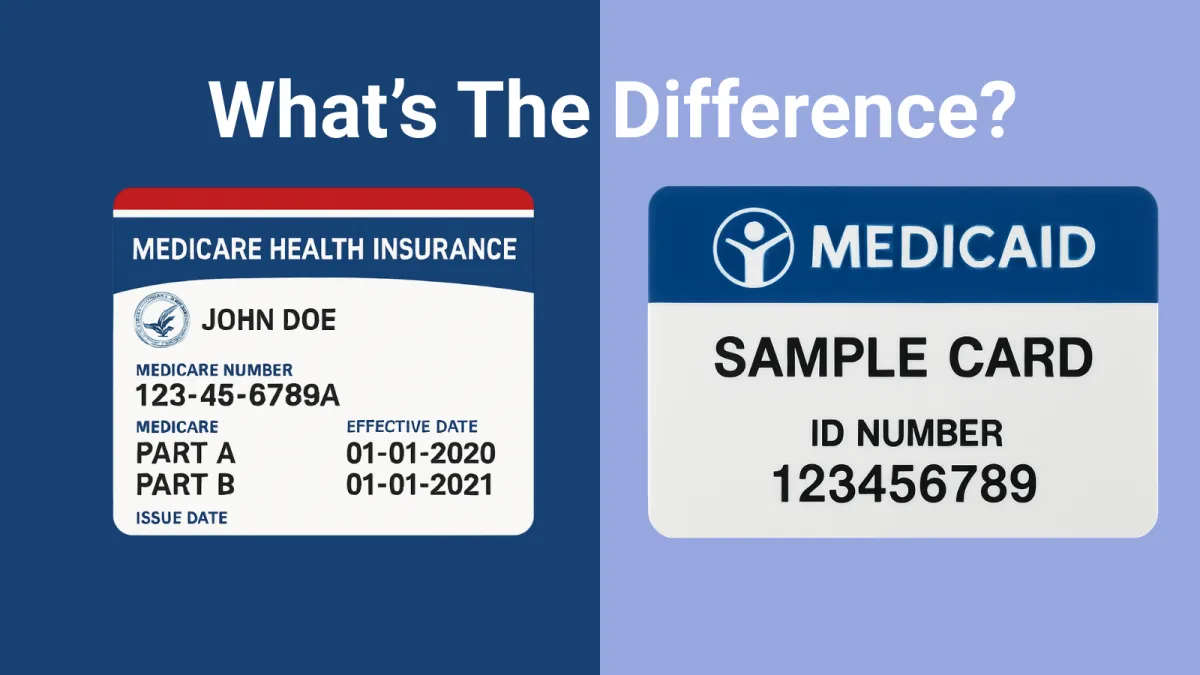
What is the Difference Between Medicare and Medicaid?
Medicare and Medicaid not only sound similar, but both focus on healthcare, so it’s understandable why they often get confused. They are not the same, and each program is designed for different types of people with different qualifications.
Below, we’ll go over the key differences, who qualifies, how the two programs can work together, and how to apply. By the end, you’ll have a clear understanding of what each program does and how they differ.
The chart above highlights the main differences between Medicare and Medicaid, including who qualifies, how each program is funded, and their overall purpose.
What Is Medicare?
Medicare is a Federally funded health insurance program that most individuals become eligible for at age 65. You may also qualify earlier if you have been diagnosed with ESRD (end stage renal disease), ALS (Lou Gehrig's disease) or have been disabled for 24 months or longer. Medicare has two main parts:
Part A covers hospital and inpatient services
Part B covers medical services such as doctor visits, outpatient care, and preventive services
Medicare does not cover 100% of your healthcare costs. It includes premiums, deductibles, coinsurance, and copays. Because of this, many people choose to add either a Medigap plan or a Medicare Advantage plan to help reduce out-of-pocket expenses and add extra benefits.
What Is Medicaid?
Medicaid is state-run program that is designed specifically to assist low income individuals and families with healthcare coverage. Although it is partly funded by the federal government, each state sets its own rules for eligibility and benefits.
If you qualify, Medicaid can help cover medical costs such as doctor visits, hospital care, prescription drugs, and long-term care, depending on your state’s program.
Can You Have Both Medicare and Medicaid?
Yes. If you qualify for both programs, you are considered dual eligible.
People who have both Medicare and Medicaid may have lower healthcare costs because Medicaid can help cover expenses like Medicare premiums, deductibles, and copays. Some dual-eligible individuals also qualify for a DSNP Medicare Advantage plan designed to work with both programs. These plans may include extra benefits such as dental, vision, hearing, transportation, and in some cases food or OTC allowances.
Because Medicaid rules and Medicare plans vary by state, many people choose to review their options with a licensed Medicare broker to better understand how the two programs work together.
How Do You Apply for Medicare and Medicaid?
Medicare - Most people will apply during your initial enrollment period which is a 7-month window around your 65th birthday.
You can apply online at https://www.ssa.gov/medicare/sign-up
Medicaid - You can apply for Medicaid through your state’s Medicaid agency at any time. Applications are typically available online, by phone, or in person through your local office.
What Do Medicare and Medicaid Cost?
Medicare - Part A is usually premium-free for people who worked enough years while paying Medicare taxes. Part B has a monthly premium, which can change each year; in 2026, the Part B premium is $202/month. In addition to premiums, Medicare includes deductibles, coinsurance, and copays when you receive care.
Medicaid - There is little to no monthly cost for having Medicaid. Depending on your income level, you may receive full Medicaid, partial Medicaid, or a Medicaid spend down. Medicaid can cover things like doctor visits, hospital care, prescriptions, and long-term care.
What Happens If You Loose Medicaid?
If you loose your Medicaid it is important to understand the reason behind it. Medicaid coverage can end for several reasons, such as an increase in income, missed renewal paperwork, or moving to another state.
Contact your state’s Medicaid office as soon as possible. You may be able to:
Reinstate coverage by submitting additional documents
Reapply for benefits (if it is past 90 days since the loss)
File an appeal if you believe coverage ended in error
Acting quickly can help prevent gaps in coverage.
Conclusion
Medicare and Medicaid are different programs designed for different groups of people
Some individuals qualify for both, which can lower healthcare costs and unlock additional benefits
Knowing how these programs work, and who to contact helps you avoid surprises and stay properly covered